Start with the individual dog
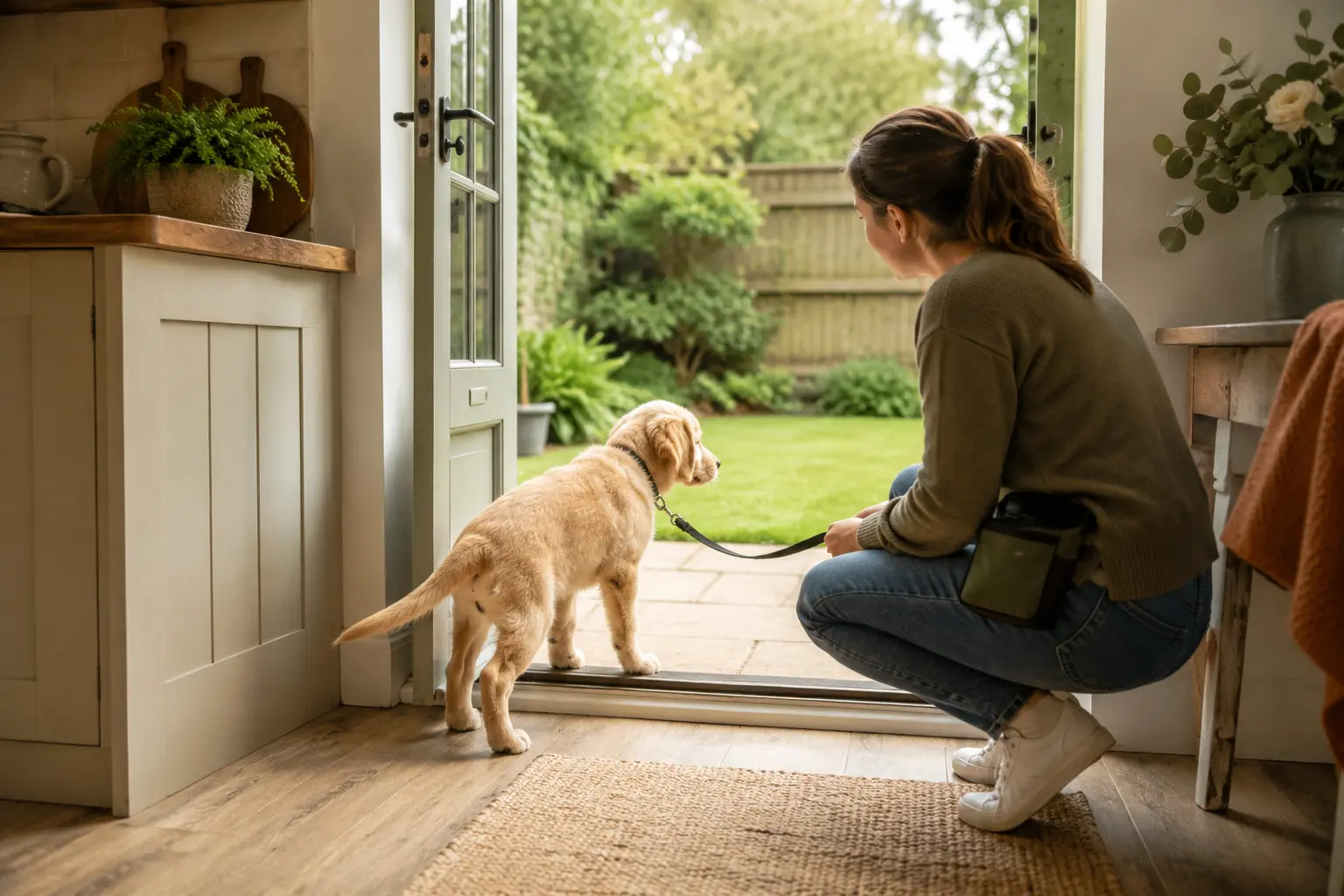
Toilet training is mostly a management and timing task. Puppies need frequent opportunities, close supervision and immediate reinforcement for eliminating in the intended place.
This guide is general education. Age, breed, medical history, temperament and environment can change what is appropriate. Sudden pain, illness, breathing difficulty, collapse or severe distress requires veterinary attention.
A practical plan
- Take the puppy out after waking, eating, drinking, active play and before settling.
- Use the same accessible area initially and wait calmly.
- Reward immediately after the puppy finishes in the correct place.
- Supervise indoors or use a safe smaller area when active supervision is impossible.
- Clean accidents thoroughly and quietly with an appropriate cleaner.
What to check before buying
- A standard lead or lightweight line for calm supervised toilet trips.
- Waste bags and an enzyme-based household cleaner.
- A simple washable mat near the exit for wet weather.
Common mistakes to avoid
- Punishment, shouting or pushing a puppy toward an accident.
- Expecting a young puppy to wait for long periods.
- Giving unrestricted access and then reacting after an accident happens.
Contact a veterinarian for sudden, severe, persistent or worsening physical or behavioural changes. For serious fear, aggression or separation distress, begin with a veterinary check and seek an appropriately qualified reward-based behaviour professional.
Shop toilet-training supplies
Compare dimensions, materials, instructions and suitability. This is a category search, not a guarantee that every listed product is appropriate.
Shop toilet-training supplies on Amazon US ↗As an Amazon Associate I earn from qualifying purchases at no additional cost to you.
Source and review note
This page was reviewed against an established primary reference: view the source. It does not imply endorsement by that organization.