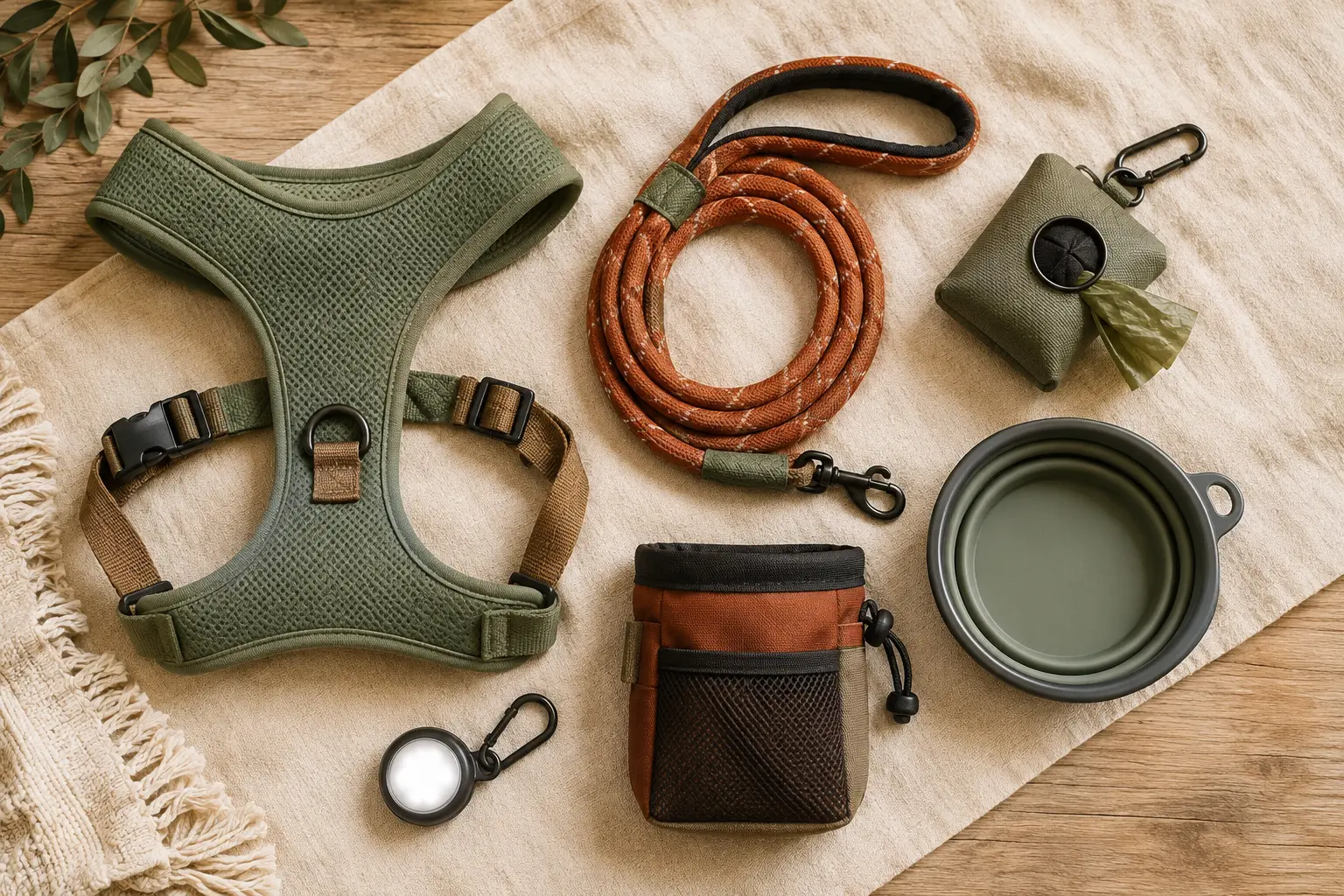
Start with the individual dog
A harness should fit the individual dog and the intended activity. Marketing labels such as no-pull or escape-proof do not replace measuring, checking movement and supervising the first uses.
This guide is general education. Age, breed, medical history, temperament and environment can change what is appropriate. Sudden pain, illness, breathing difficulty, collapse or severe distress requires veterinary attention.
A practical plan
- Measure the chest and neck areas specified by the manufacturer.
- Use that brand’s size chart rather than choosing only by breed or body weight.
- Check that straps lie flat without cutting into the armpits or restricting the shoulders.
- Confirm clips, rings and adjustment points are secure before every walk.
- Recheck growing puppies and dogs whose body weight changes.
What to check before buying
- Useful adjustment at more than one point.
- Hardware appropriate to the dog’s size and strength.
- A shape that allows comfortable shoulder movement.
- Reflective details when low-light visibility matters.
Common mistakes to avoid
- Leaving a harness on unattended if it could snag.
- Assuming one size fits every dog of a breed.
- Using a damaged clip, frayed strap or poorly fitted restraint.
Contact a veterinarian for sudden, severe, persistent or worsening physical or behavioural changes. For serious fear, aggression or separation distress, begin with a veterinary check and seek an appropriately qualified reward-based behaviour professional.
Compare dog harnesses
Compare dimensions, materials, instructions and suitability. This is a category search, not a guarantee that every listed product is appropriate.
Compare dog harnesses on Amazon US ↗As an Amazon Associate I earn from qualifying purchases at no additional cost to you.
Source and review note
This page was reviewed against an established primary reference: view the source. It does not imply endorsement by that organization.