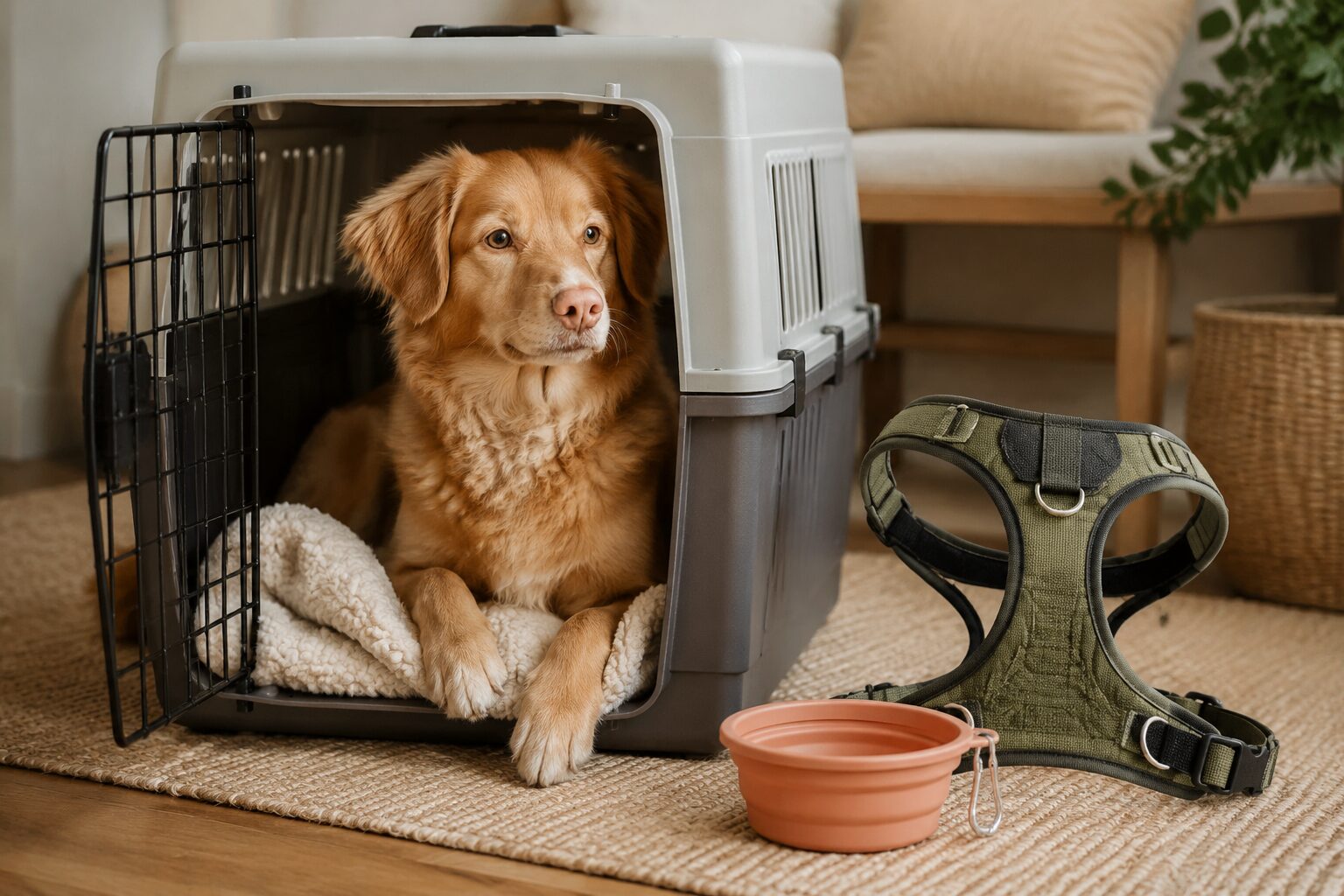
Start with the individual dog
Travel safety begins before the journey. The dog should become familiar with the crate or restraint gradually, and equipment must suit both the dog and vehicle.
This guide is general education. Age, breed, medical history, temperament and environment can change what is appropriate. Sudden pain, illness, breathing difficulty, collapse or severe distress requires veterinary attention.
A practical plan
- Practice entering and resting in the stationary setup before longer journeys.
- Choose a secure restraint or crate suitable for the intended use.
- Check ventilation, temperature, identification and water planning.
- Plan breaks and destination requirements in advance.
- Never leave a dog unattended in a vehicle when temperature could become unsafe.
What to check before buying
- A correctly sized travel crate or appropriate vehicle restraint.
- A stable travel water container and familiar bedding.
- Identification and a practical cleanup kit.
Common mistakes to avoid
- Allowing a dog to travel loose.
- Using a restraint without reading its fitting instructions.
- Assuming mild outdoor weather means a parked vehicle is safe.
Contact a veterinarian for sudden, severe, persistent or worsening physical or behavioural changes. For serious fear, aggression or separation distress, begin with a veterinary check and seek an appropriately qualified reward-based behaviour professional.
Shop travel gear
Compare dimensions, materials, instructions and suitability. This is a category search, not a guarantee that every listed product is appropriate.
Shop travel gear on Amazon US ↗As an Amazon Associate I earn from qualifying purchases at no additional cost to you.
Source and review note
This page was reviewed against an established primary reference: view the source. It does not imply endorsement by that organization.