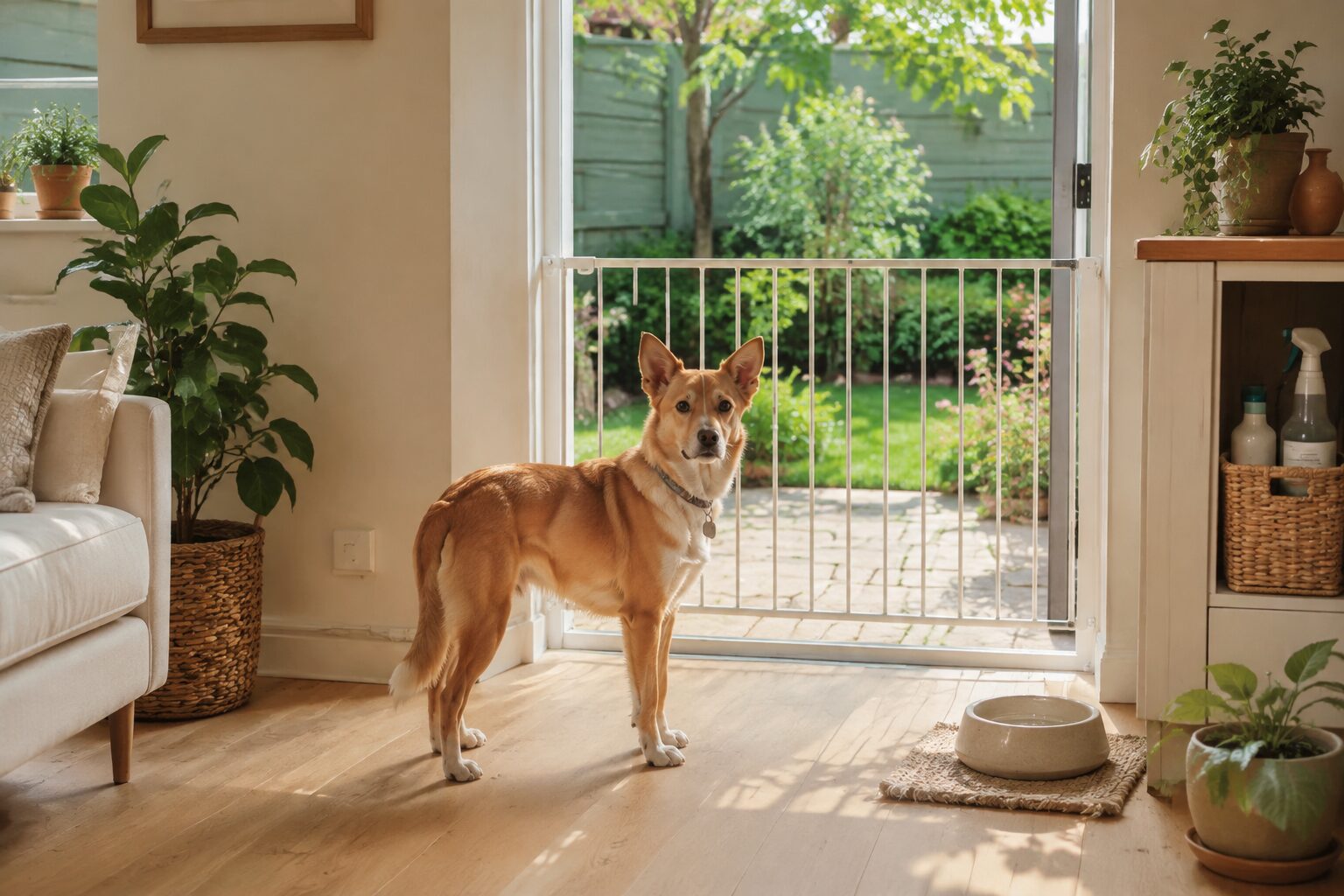
Start with the individual dog
Dog-proofing works best as prevention rather than constant correction. Consider what the dog can reach, chew, swallow, climb through or open when unsupervised.
This guide is general education. Age, breed, medical history, temperament and environment can change what is appropriate. Sudden pain, illness, breathing difficulty, collapse or severe distress requires veterinary attention.
A practical plan
- Secure exterior doors, gates and fencing.
- Store medicines, chemicals and dangerous foods behind closed barriers.
- Remove swallowable objects, cords and damaged toys.
- Check gardens, garages and waste storage.
- Provide a quiet safe resting area away from household traffic.
What to check before buying
- Stable gates suited to the opening and the dog’s size.
- Cord protection and secure storage where needed.
- Washable mats and suitable safe-zone equipment.
Common mistakes to avoid
- Relying on verbal rules when a hazard remains accessible.
- Using a crate or gated area for excessive isolation.
- Assuming a product labeled pet-safe is suitable in every circumstance.
Contact a veterinarian for sudden, severe, persistent or worsening physical or behavioural changes. For serious fear, aggression or separation distress, begin with a veterinary check and seek an appropriately qualified reward-based behaviour professional.
Shop home-safety supplies
Compare dimensions, materials, instructions and suitability. This is a category search, not a guarantee that every listed product is appropriate.
Shop home-safety supplies on Amazon US ↗As an Amazon Associate I earn from qualifying purchases at no additional cost to you.
Source and review note
This page was reviewed against an established primary reference: view the source. It does not imply endorsement by that organization.