Start with the individual dog
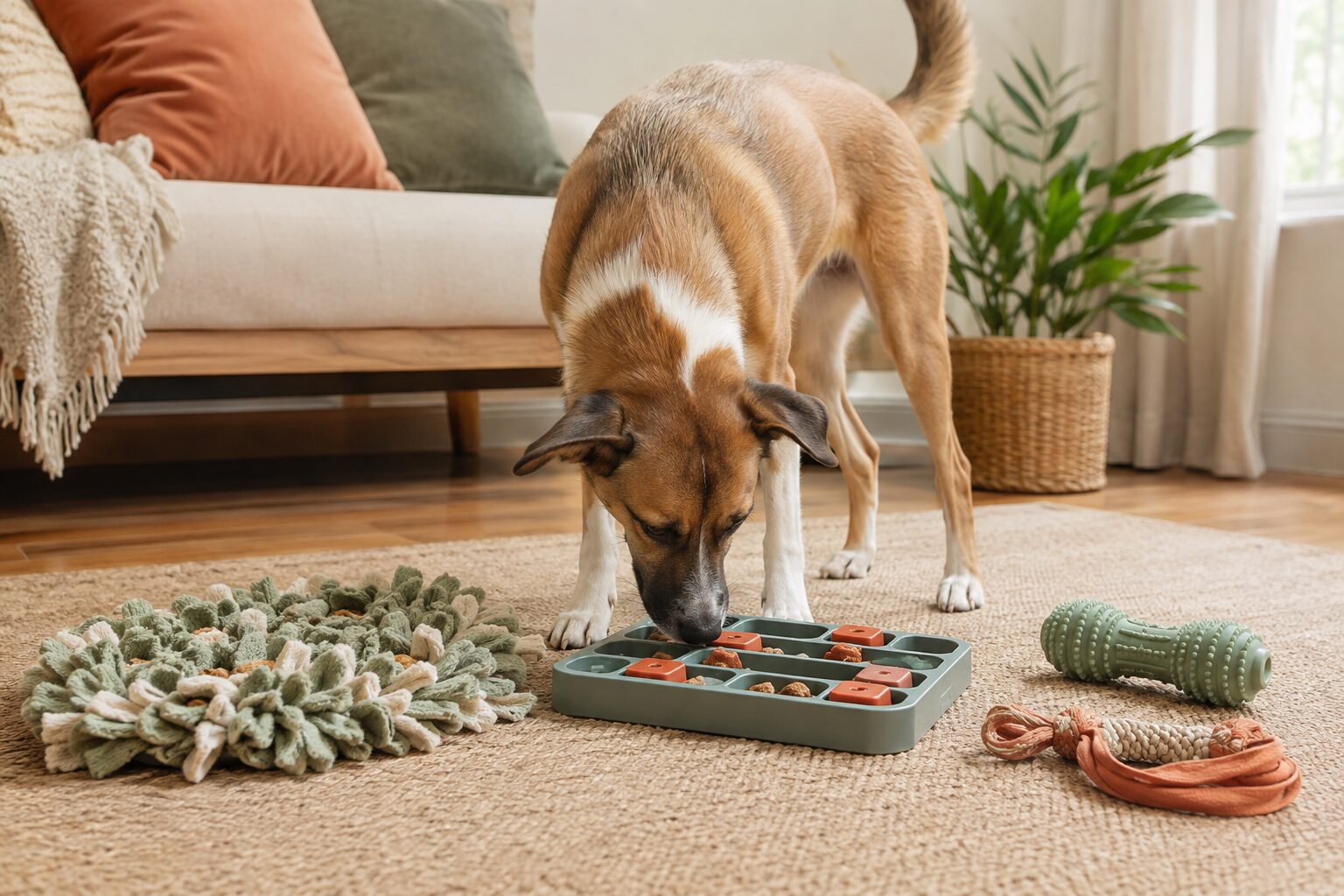
Enrichment should help the individual dog use normal behaviours safely. More toys are not automatically better; the activity should match the dog’s size, confidence and play style.
This guide is general education. Age, breed, medical history, temperament and environment can change what is appropriate. Sudden pain, illness, breathing difficulty, collapse or severe distress requires veterinary attention.
A practical plan
- Use sniffing and searching with easy successes before increasing difficulty.
- Rotate a small number of activities instead of leaving everything available.
- Supervise food puzzles and new chew items.
- Include calm problem-solving as well as active play.
- Stop if frustration, guarding or unsafe destruction appears.
What to check before buying
- Products large enough not to be swallowed.
- Materials and construction appropriate to the dog’s play style.
- Items that can be cleaned and inspected easily.
Common mistakes to avoid
- Leaving string, torn pieces or damaged toys available.
- Using enrichment to replace social contact, exercise, sleep or veterinary care.
- Making every activity so difficult that it produces frustration.
Contact a veterinarian for sudden, severe, persistent or worsening physical or behavioural changes. For serious fear, aggression or separation distress, begin with a veterinary check and seek an appropriately qualified reward-based behaviour professional.
Shop enrichment
Compare dimensions, materials, instructions and suitability. This is a category search, not a guarantee that every listed product is appropriate.
Shop enrichment on Amazon US ↗As an Amazon Associate I earn from qualifying purchases at no additional cost to you.
Source and review note
This page was reviewed against an established primary reference: view the source. It does not imply endorsement by that organization.