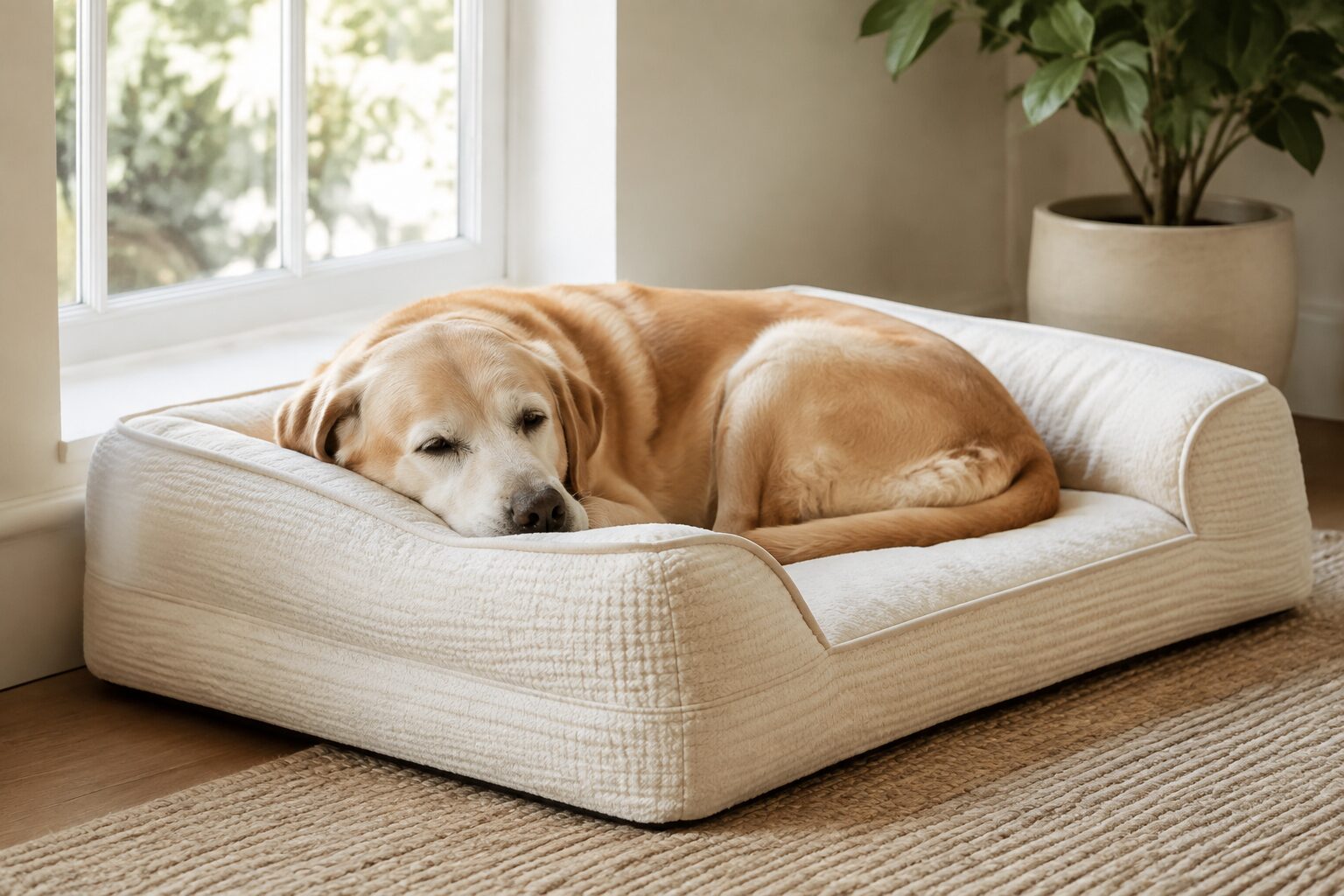
Start with the individual dog
The label dimensions may describe the outside of a bed rather than the usable sleeping area. Observe how the dog naturally rests before choosing shape and support.
This guide is general education. Age, breed, medical history, temperament and environment can change what is appropriate. Sudden pain, illness, breathing difficulty, collapse or severe distress requires veterinary attention.
A practical plan
- Measure the dog in a relaxed sleeping position and check internal dimensions.
- Choose access height that suits the dog’s mobility.
- Look for a removable washable cover and realistic cleaning instructions.
- Consider room temperature and whether the dog seeks warmth or cooler surfaces.
- Provide more than one resting location when practical.
What to check before buying
- A usable sleeping area large enough for the dog’s preferred posture.
- Stable non-slip placement.
- Washable materials and replaceable covers where available.
- Supportive filling that does not collapse immediately under the dog’s weight.
Common mistakes to avoid
- Choosing only by breed label or a styled product photograph.
- Using heat products without appropriate safety controls and supervision.
- Assuming a bed will solve sudden reluctance to lie down or get up.
Contact a veterinarian for sudden, severe, persistent or worsening physical or behavioural changes. For serious fear, aggression or separation distress, begin with a veterinary check and seek an appropriately qualified reward-based behaviour professional.
Compare dog beds
Compare dimensions, materials, instructions and suitability. This is a category search, not a guarantee that every listed product is appropriate.
Compare dog beds on Amazon US ↗As an Amazon Associate I earn from qualifying purchases at no additional cost to you.
Source and review note
This page was reviewed against an established primary reference: view the source. It does not imply endorsement by that organization.