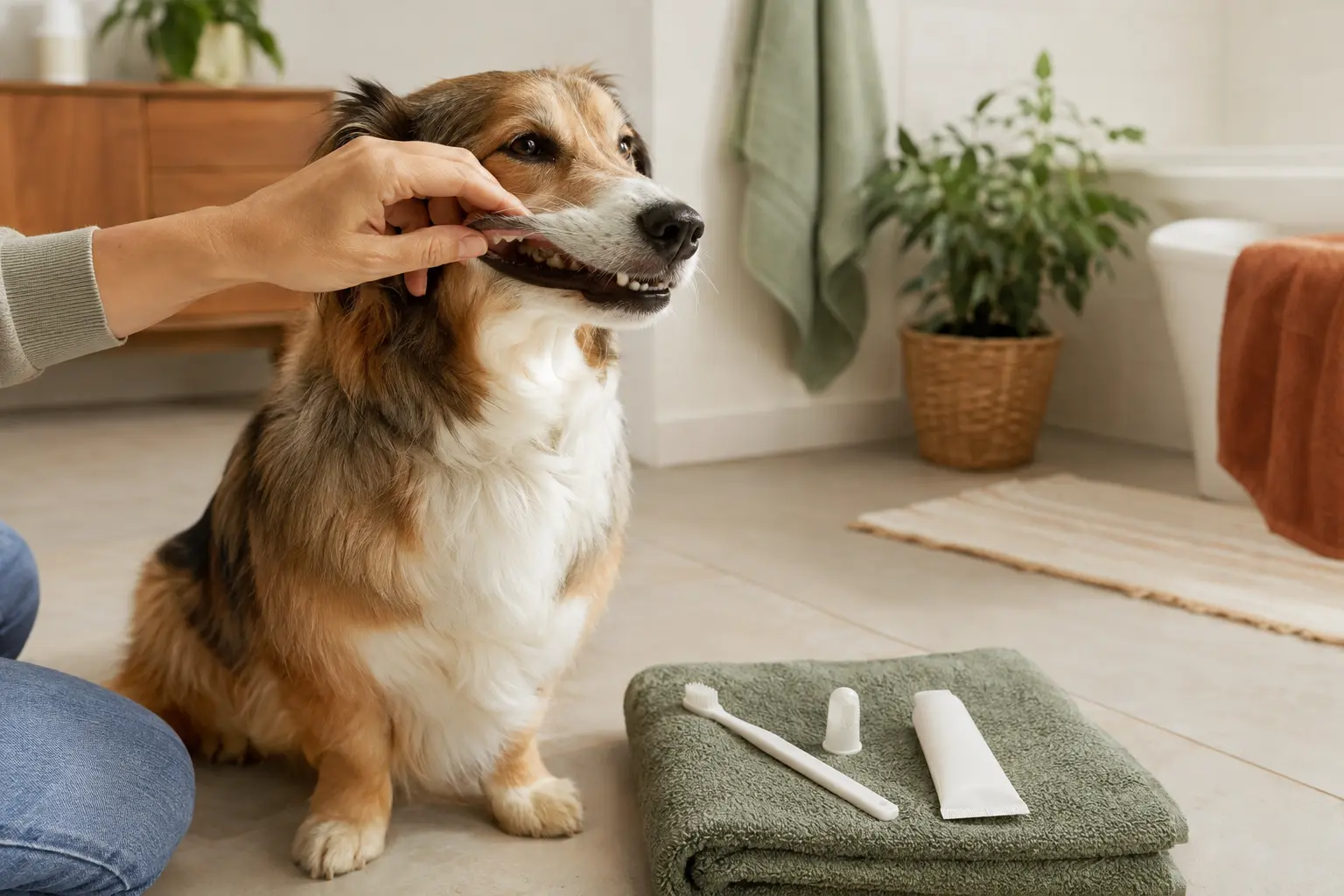
Why dental care matters
Plaque builds up on dogs’ teeth just as it does on ours. Over time it can contribute to gum inflammation, pain and periodontal disease. Regular home care can reduce plaque between veterinary examinations, but it cannot remove disease hidden below the gum line.
Changes such as persistent bad breath, bleeding gums, drooling, dropping food, chewing on one side, facial swelling or reluctance to eat deserve veterinary assessment. Never assume mouth pain is simply part of getting older.
A simple home routine
- Start slowly with brief, calm handling around the muzzle and lips.
- Use toothpaste made for dogs; human toothpaste is not appropriate.
- Introduce a soft pet toothbrush or suitable finger brush gradually.
- Focus on the outer tooth surfaces and gum line without forcing the mouth open.
- Aim for frequent brushing; consistency matters more than one long session.
What to look for
- Red, swollen or bleeding gums.
- Loose, broken or heavily discoloured teeth.
- Persistent bad breath rather than a temporary food smell.
- Pawing at the mouth, reduced appetite or a change in chewing.
- New facial swelling or discharge around the mouth or nose.
Products: useful versus optional
Toothbrushes and dog-safe toothpaste are the foundation of home dental care. Dental chews, diets and other products may be useful for some dogs, but they should complement rather than replace brushing and veterinary checks. Choose items appropriate for your dog’s size and chewing style and supervise chewing.
Arrange veterinary advice for pain, bleeding, broken teeth, swelling, difficulty eating, sudden drooling or persistent bad breath. Professional dental cleaning may require anaesthesia so the teeth and tissues below the gum line can be assessed and treated properly.
Shop dog dental-care supplies
Compare size, ingredients and instructions before buying.
Shop dog dental-care supplies on Amazon US ↗As an Amazon Associate I earn from qualifying purchases at no additional cost to you.
Source and review note
Reviewed against veterinary dental-care guidance from the American Veterinary Medical Association. This does not imply endorsement.